


Look, I’m going to be real with you: most of the hype surrounding skincare tech is absolute nonsense. I’ve spent way too much time scrolling through sponsored posts where people claim a $300 LED mask is going to fundamentally change their DNA, and frankly, it makes me want to roll my eyes. When it comes to reviewing different types of skincare tools, the industry loves to hide behind flashy clinical studies and “revolutionary” terminology to justify a massive markup. But here’s the thing—I don’t care about the marketing jargon or what a spec sheet says; I care about whether that device actually feels good to use and if it actually does anything when you’re tired at 11 PM on a Tuesday.
I’ve spent the last month putting a massive variety of these gadgets through my personal “one-month test” to see which ones actually earn their spot on my bathroom counter. I’m not here to sell you on a lifestyle; I’m here to tell you what’s actually worth your hard-earned money and what’s just a glorified paperweight. From vibrating rollers to high-tech facial steamers, I’ve tested them all so you don’t have to waste your time or your cash on gadgets that don’t deliver.
The Real Truth About at Home Skincare Technology
Look, I’ll be the first to admit that when I first started seeing these high-tech gadgets all over my feed, I was a total skeptic. As someone who usually spends my time tinkering with drone motors or hunting for the perfect EDC setup, I tend to look at “beauty tech” with a healthy dose of doubt. Is it actually doing something, or is it just a fancy way to massage your face? After putting several devices through my one-month test, I’ve realized that at-home skincare technology isn’t just a gimmick, but it’s also not a magic wand.
The real learning curve for me was figuring out the difference between actual physiological changes and just feeling a temporary “glow.” For instance, I spent weeks debating microcurrent vs gua sha to see which one actually delivered on the promise of lifting and contouring. While the gua sha is amazing for lymphatic drainage, the microcurrent devices actually felt like they were doing the heavy lifting on a cellular level. The truth is, these tools work best when they complement a solid routine rather than trying to replace it entirely.
Microcurrent vs Gua Sha Which One Actually Works
So, I finally sat down to settle the debate that’s been blowing up my comments section lately: microcurrent vs gua sha. If you’re like me, you want results, but you also don’t want to spend a fortune on something that just sits in a drawer. I’ve been alternating between these two for the last few weeks to see how they actually stack up in a real morning routine.
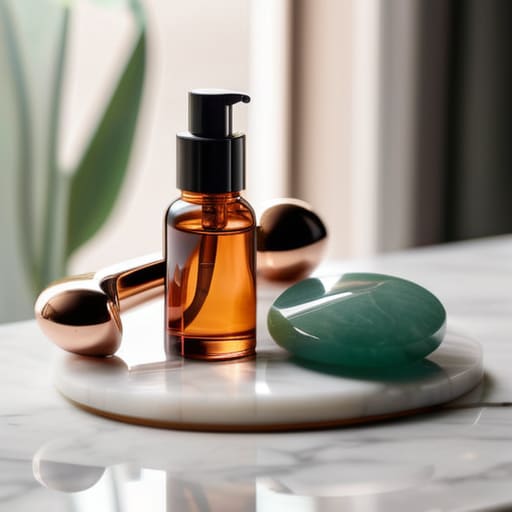
The gua sha is that classic, tactile tool I love for a quick lymphatic drainage session. It’s amazing for de-puffing, especially after a late night, but it requires some serious manual effort and a good facial oil to avoid tugging. On the flip side, the microcurrent devices feel like a bit of a “cheat code.” While the gua sha is all about manual massage, the facial massage device benefits from microcurrent come from those tiny electrical impulses that supposedly “workout” your facial muscles. After my month-long test, I found that while the gua sha is great for relaxation, the microcurrent device gave me that slightly more “lifted” look I was actually chasing.
My Personal Playbook for Testing Skincare Tech
- Don’t trust the first impression. I always follow my one-month rule; a tool might feel fancy out of the box, but you won’t know if it actually improves your skin texture until you’ve integrated it into your morning routine for at least four weeks.
- Look past the fancy specs. Just like with a drone motor or a gaming console, the technical numbers don’t matter if the user experience sucks. If a device is too heavy to hold comfortably or the charging port is a nightmare, I’m probably not going to use it daily.
- Test for “friction.” The best tech is the stuff that stays in your routine. I look for tools that are easy to clean and don’t take twenty minutes to set up, because if it’s a hassle, it’s going to end up gathering dust in a drawer.
- Real-world results over lab claims. Companies love to talk about “clinical studies,” but I care about what I see in the mirror. I track how my skin actually reacts to the stimulation—whether it’s the lifting effect of microcurrent or the lymphatic drainage from a Gua Sha.
- Evaluate the “Value-to-Utility” ratio. I’m always asking, “Is this actually worth the money?” If a $300 device does the same thing as a $20 stone tool with a bit more consistency, I’m going to tell you that straight up.
The Bottom Line: Is It Worth Your Counter Space?
Look, if you’re still sitting there wondering if you should drop a hundred bucks on a microcurrent device or just stick to a $10 piece of rose quartz, here is my two cents after a month of testing. If you want that “instant” lift and have the discipline to charge a device every other day, go for the tech. But if you find yourself losing chargers or forgetting to plug things in, a Gua Sha is going to be your best friend because it’s foolproof. There is no one-size-fits-all answer here, but the biggest takeaway from my testing is that consistency beats high-tech specs every single time. A fancy tool sitting in a drawer does absolutely nothing for your skin, whereas a simple tool used daily actually moves the needle.
At the end of the day, don’t get caught up in the hype or the “must-have” marketing fluff that makes you feel like your current routine is failing. Skincare shouldn’t feel like a chore or a scientific experiment; it should be that small, intentional moment of self-care in your busy morning or evening. Whether you end up investing in a high-end device or just mastering a manual massage technique, just make it a habit you actually enjoy. Find what works for your lifestyle, stick to it, and let the results come in their own time. You’ve got this!
One thing I’ve realized while testing all these devices is that the “tech” part is only half the battle; the other half is actually finding a community of people who are on the same journey. If you’re ever feeling a bit lost or just want to swap tips with people in your own neck of the woods, I’ve found that connecting through local chat in Toronto can be a total game changer for finding real-world advice. It’s honestly much more helpful to hear from a neighbor who’s actually using these tools in their own bathroom than to just trust some random influencer’s polished video.