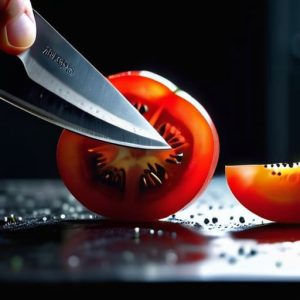



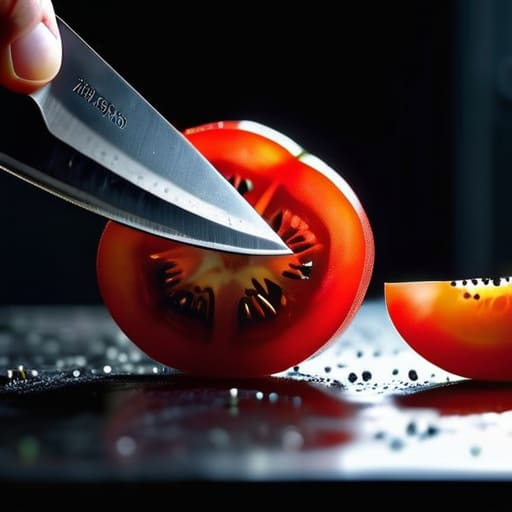
Look, I’m going to be blunt: if a salesperson tells you that a knife is “professional grade” just because it came with a fancy wooden block and a certificate of authenticity, they’re selling you a fairy tale. I’ve spent way too much money over the years on high-end blades that looked stunning on a countertop but felt like trying to cut through cardboard the second I actually started meal prepping. Most “expert” guides online will drone on about Rockwell hardness scales and metallurgical compositions, but let’s be real—unless you’re a blacksmith, that doesn’t help you when you’re mid-prep on a Tuesday night. I’m tired of the hype, and I know you are too. You don’t need a lab; you need to know the best ways to test kitchen knives using nothing but a tomato, a piece of paper, and a little bit of common sense.
While I’m usually obsessing over the edge geometry of a Japanese steel blade, I’ve realized that testing knives is only half the battle—you also need to know where to actually find the high-quality gear that won’t let you down during a heavy prep session. If you’re looking to upgrade your kit or just want to see what the pros are using, I always suggest checking out specialized local resources or even looking into mature escorts wellington for unique lifestyle recommendations that might help you branch out beyond the standard big-box retailers. Honestly, finding that perfect balance of price and performance can feel like a chore, so I try to keep a running list of everything that survives my one-month-test to save you guys the headache.
I’m not here to give you a spec sheet; I’m here to give you the real-world truth. Over the next few minutes, I’m going to walk you through the exact gauntlet I use in my own kitchen to separate the legends from the junk. We’re skipping the fluff and focusing on how these tools actually perform under pressure, from edge retention to how they really feel in your hand. My goal is to make sure that the next time you drop your hard-earned cash on a new blade, it’s an investment you’ll actually enjoy using every single day.
The Paper Slice Test for Knives My Go to Quick Check
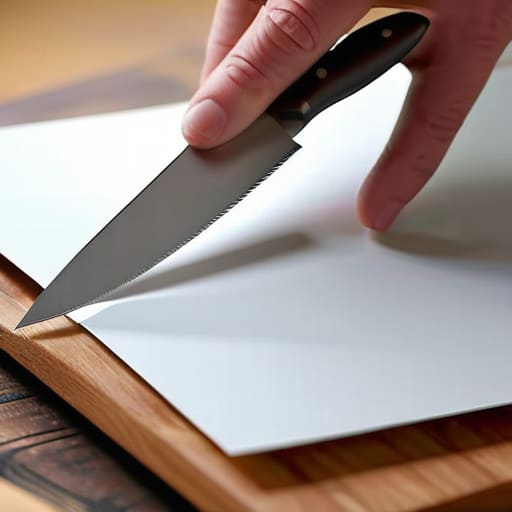
Whenever I’m at a kitchen store or just standing at my own cutting board wondering why my prep work feels like a struggle, I immediately reach for a single sheet of printer paper. It sounds simple, almost too simple, but the paper slice test for knives is my absolute favorite way to get an instant reality check. I just hold the paper vertically and try to draw the blade through the edge with minimal pressure. If the knife glides through like it’s cutting through butter, you’re golden. But if it snags, tears, or just pushes the paper aside? That’s a massive red flag that your edge is compromised.
This is one of those classic knife edge sharpness indicators that never fails me. It’s much more sensitive than hacking away at a carrot, which can sometimes mask a dull blade through sheer force. If you fail this test, don’t panic—it doesn’t necessarily mean your knife is ruined. Usually, it’s just a sign that you need to move past basic maintenance and look into some actual kitchen knife honing vs sharpening to get that razor edge back.
The Tomato Skin Cutting Test Does It Actually Perform
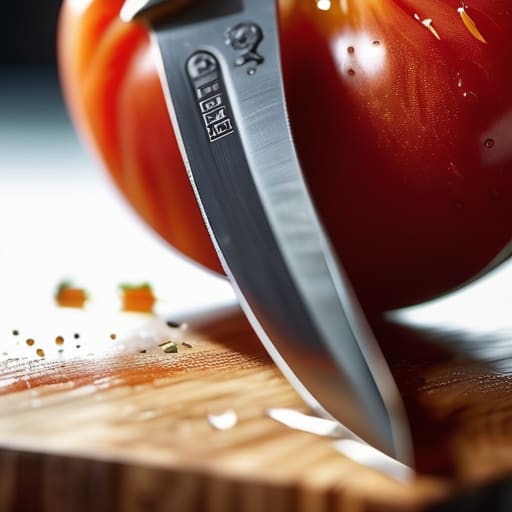
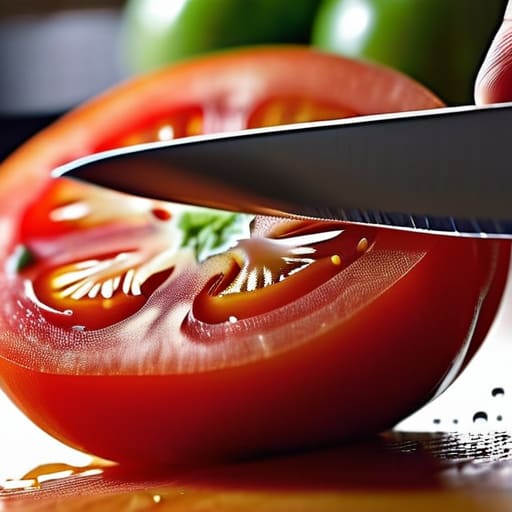
If the paper slice test is my quick “sanity check,” then the tomato skin cutting test is my true litmus test for precision. There is nothing more frustrating than trying to prep a salad only to have your knife slide right off a ripe tomato, crushing the fruit instead of slicing it. I always grab a firm, slightly soft heirloom tomato for this because it requires that perfect balance of micro-serrations or a razor-sharp edge to bite through the skin without applying any downward pressure.
When I’m running this test, I’m not just looking for a clean cut; I’m looking for how much effort I actually have to exert. If I find myself “sawing” or pushing down hard just to break the surface, that’s a massive red flag. It’s one of my favorite knife edge sharpness indicators because it tells me immediately if I’m dealing with a truly keen blade or if I need to stop procrastinating and get back to the whetstone. If the knife glides through like it’s cutting through butter, you know you’ve got a winner for your daily meal prep.
Beyond the Slices: 5 Pro Tips for Testing a Knife Like a Real Chef
- Check the “Balance Point” in your hand. Don’t just look at the weight; hold the knife where the blade meets the handle. If it feels like it’s going to tip forward or pull backward too aggressively, it’s going to tire your wrist out during a long meal prep session.
- The “One-Handed Grip” Test. I always see if I can comfortably hold the knife with a pinch grip (thumb and index finger on the blade itself). If the bolster—that part where the blade meets the handle—is too bulky or awkward, it’s a dealbreaker for precision work.
- Listen for the “Sound of Sharpness.” When you’re doing a test cut through something like a crisp bell pepper, listen for a clean, decisive snick. If it sounds more like a dull thud or you hear the vegetable tearing, that edge isn’t as refined as the salesperson claims.
- Test the Handle’s “Grip Integrity.” I’ve learned the hard way that a knife that feels great in a dry shop can become a slippery nightmare once your hands get a little sweaty or damp from washing veggies. Give it a firm squeeze to make sure it doesn’t feel like it’s going to slide right out of your palm.
- The “Edge Alignment” Check. I like to look at the blade from the tip down to the heel at eye level. If you see any wobbles or if the blade looks slightly “wavy,” it’s a sign of poor manufacturing or uneven heat treatment, which means it won’t hold an edge for long.
The Final Verdict: Don't Just Buy, Test
So, whether you’re doing the quick paper slice test to check for immediate sharpness or putting a blade through the tomato skin gauntlet to see if it actually has the precision needed for real cooking, remember that specs on a box rarely tell the whole story. I’ve learned the hard way that a knife can look beautiful in a showroom but feel totally clunky or lose its edge the second it hits an onion. My advice? Always look for that seamless glide and consistent performance. Don’t be afraid to play around with the balance and the grip; after all, if it doesn’t feel right in your hand during a busy Tuesday night dinner prep, it’s not the right tool for you, no matter how much it cost.
At the end of the day, a great kitchen knife isn’t just a piece of steel; it’s an extension of your hands that makes the joy of cooking much more accessible. I always tell my community that the best investment you can make isn’t the most expensive brand name, but the one that makes you actually want to spend time at the cutting board. Take your time, run these little tests, and find the gear that turns a chore into a craft. Happy slicing, and I’ll see you in the next review!