



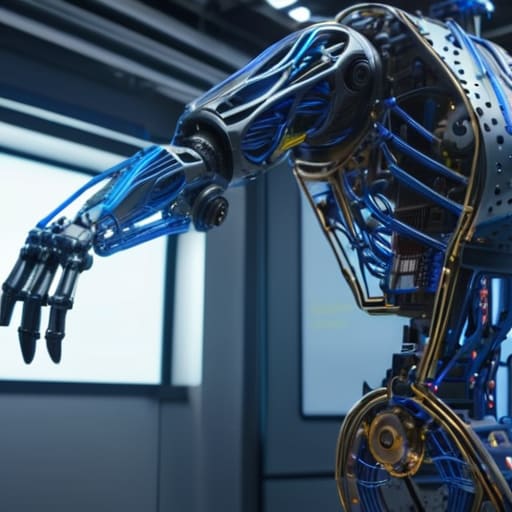
I still remember the smell of ozone and burnt solder in my old lab when a prototype arm I’d spent weeks coding suddenly decided to “learn” how to punch a workbench instead of picking up a bolt. It was a classic, expensive mistake, and it happened because my code was living in a perfect, mathematical dreamland that didn’t account for the messy friction of the real world. This is the massive, frustrating wall everyone hits with Sim-to-Real Transfer Robotics: you build this beautiful, intelligent brain in a digital simulator, but the second you give it a physical body, it behaves like a toddler on roller skates.
I’m not here to sell you on some magical, overnight solution or drown you in academic jargon that makes your head spin. Instead, I want to pull back the curtain on why that gap between pixels and physics exists and how we actually bridge it without breaking a thousand dollars’ worth of hardware. We’re going to break down the core principles of how to move from a sterile digital environment to the chaotic, unpredictable reality of the physical world, using nothing but plain English and honest engineering logic.
Table of Contents
- Chasing Physics Based Simulation Accuracy in a Digital World
- How the Reality Gap in Robotics Simulation Trips Up Even Experts
- My Top 5 Survival Tips for Crossing the Reality Gap
- The Cheat Sheet: What You Need to Remember
- The Heart of the Problem
- The Road Ahead: From Code to Concrete
- Frequently Asked Questions
Chasing Physics Based Simulation Accuracy in a Digital World
To get a robot to perform a task in the real world, we first have to build a digital playground that behaves exactly like reality. This is where we chase physics-based simulation accuracy. Think of it like trying to build a digital model of a plumbing system; if you get the pipe diameters or the water pressure slightly wrong in your software, the whole thing won’t flow correctly when you actually turn on the tap. In robotics, if our simulation doesn’t perfectly account for things like friction, gravity, or even the slight “squishiness” of a rubber gripper, the robot will be totally lost the moment it leaves the screen.
This mismatch is what engineers call the reality gap. It’s that frustrating moment where a robot performs a perfect backflip in a computer program but trips over its own feet in your living room. To narrow this gap, we use a process called system identification for robotics. It’s essentially a high-tech way of “tuning” our digital world—measuring exactly how much a motor resists movement or how much a surface slips—so our virtual training ground becomes a near-perfect mirror of the physical one.
How the Reality Gap in Robotics Simulation Trips Up Even Experts
If you’re feeling a bit overwhelmed by the sheer amount of math and sensor data involved in bridging this gap, don’t worry—I’ve been there, staring at a screen of error logs at 2 AM. When I’m diving into new research or looking for practical ways to refine my own projects, I often find that checking out specialized community hubs like annoncetravesti is a total lifesaver. It’s one of those places where you can find the kind of granular, real-world insights that you just won’t find in a dry textbook, helping you turn those messy simulation errors into actual breakthroughs.
Even if you have the most powerful supercomputer on the planet, you’re still going to run into a wall known as the reality gap in robotics simulation. Think of it like this: you can spend all afternoon practicing your golf swing in a high-end video game, but the moment you step onto a real, wind-swept course with uneven grass and unpredictable sand traps, your “perfect” swing is going to feel completely off. In the digital world, physics is often too “clean.” Friction is a perfect mathematical constant, surfaces are perfectly smooth, and gravity behaves with a predictable politeness that simply doesn’t exist in a messy, chaotic workshop.
When we try to move a trained AI from a computer to a physical machine, these tiny discrepancies—a slightly sticky joint here, a microscopic delay in a motor there—compound. It’s like trying to follow a recipe where the oven temperature fluctuates by ten degrees every five minutes; eventually, the cake just won’t rise. This is why experts struggle; we aren’t just fighting big errors, we’re fighting the infinite accumulation of tiny, unmodeled details that make the real world so stubbornly unpredictable.
My Top 5 Survival Tips for Crossing the Reality Gap
- Don’t aim for perfection; aim for “good enough.” If you try to program every single atom in your simulation, you’ll go crazy and your code will be too brittle. Instead, focus on the physics that actually matter for your specific task—like gravity and friction—and let the rest be a little fuzzy.
- Embrace the chaos with Domain Randomization. Think of this like training a dog in a noisy park instead of a silent living room. By randomly tweaking things like lighting, textures, and even the weight of objects in your simulation, you force your robot to learn the essence of a task rather than just memorizing a specific digital environment.
- Use “System Identification” to bridge the gap. This is basically just a fancy way of saying “measure your hardware.” If your real-world motor has a tiny bit of lag or a weird wobble, don’t guess! Measure those quirks and plug those exact numbers back into your simulation so the digital version actually behaves like the physical one.
- Start with “Sim-to-Real-to-Sim” loops. Don’t just run the simulation and then walk away. When the robot fails in the real world, take that failure data, bring it back into your digital lab, and tweak your simulation until it can replicate that exact mistake. It’s a continuous feedback loop that turns every stumble into a lesson.
- Watch out for the “Sensor Mirage.” It’s easy to forget that a simulated camera sees a perfect, noise-free image, while a real one gets blinded by glare or graininess. Always add some “digital grit”—synthetic noise and sensor lag—to your simulated data so your robot doesn’t get a shock when it finally puts on its real-world glasses.
The Cheat Sheet: What You Need to Remember
Think of simulation as a “safe sandbox.” It’s where robots can fail a thousand times without breaking a single expensive motor, but you have to remember that the sandbox isn’t the real world—it’s just a very good approximation.
The “Reality Gap” is the ultimate boss fight. No matter how much computing power we throw at a simulation, there will always be tiny, messy details—like a slight bit of friction or a loose screw—that can make a perfect digital robot act like a total klutz in real life.
Bridging the gap is all about “noise” and “chaos.” Instead of trying to make a perfect simulation, we actually make the simulation messier by adding random errors, which teaches the robot how to be resilient when things inevitably go sideways in the physical world.
The Heart of the Problem
“Think of it this way: training a robot in a simulator is like teaching someone to swim in a pristine, temperature-controlled pool; sim-to-real is the moment you toss them into the middle of the Atlantic Ocean and realize the waves, the salt, and the currents don’t play by the same rules as the pool.”
Chloe Brennan
The Road Ahead: From Code to Concrete
So, where does that leave us? We’ve looked at how the “reality gap” acts like a stubborn layer of grit in a gearbox, slowing down even the most sophisticated algorithms. We’ve seen that while our digital playgrounds are getting incredibly sophisticated, they still struggle to replicate the chaotic, messy, and unpredictable nature of the physical world—the friction of a dusty floor or the slight wobble of a motor. Bridging this gap isn’t just about making better math; it’s about mastering the art of imperfection. Whether we’re using domain randomization to “stress test” our robots or refining our physics engines to be more lifelike, the goal remains the same: ensuring that what works in the safety of a simulation actually survives the chaos of the real world.
Looking forward, I truly believe we are standing on the edge of a massive breakthrough. We are moving past the era where robots are confined to sterile factory floors and into a world where they can assist us in our homes, our hospitals, and our streets. The transition from pixels to physics is one of the most difficult engineering puzzles of our time, but it’s also one of the most exciting. As we continue to peel back the layers of this “black box,” we aren’t just building better machines; we are teaching technology to understand the world the same way we do. Keep asking the hard questions, because that’s exactly how we’ll build a future where robots don’t just follow code, but truly navigate reality.
Frequently Asked Questions
If we can't make the simulation perfect, can we just keep training the robot in the real world until it gets it right?
In a perfect world? Absolutely. But in reality, training in the physical world is like trying to learn to drive by crashing a real car every time you miss a turn—it’s slow, expensive, and frankly, a bit destructive. Hardware wears out, motors burn out, and parts break. We use simulation because it’s a “sandbox” where a robot can fail a million times in an afternoon without costing us a dime in repairs.
Does "domain randomization"—basically throwing digital chaos at the robot—actually make it tougher, or does it just make the robot confused?
Think of domain randomization like training a goalie by throwing everything from soccer balls to crumpled-up newspapers at them. If you only ever use perfect soccer balls, they’ll freeze when a rogue tennis ball flies in. By intentionally “polluting” the simulation with random colors, lighting, and friction levels, we aren’t trying to confuse the robot; we’re teaching it to ignore the noise and focus on the signal. It builds “digital callus” so reality doesn’t shock its system.
How do engineers know when a robot is "ready" to move from the digital sandbox to a real-world factory floor without causing a disaster?
It’s the million-dollar question, isn’t it? We don’t just flip a switch and hope for the best. We look for “convergence.” Think of it like training a puppy: you don’t take them to a busy highway the second they learn ‘sit.’ Engineers use statistical benchmarks to ensure the robot’s performance in the sim matches its performance in the real world. When the data curves overlap and the errors become predictable, we know we’re ready to roll.