


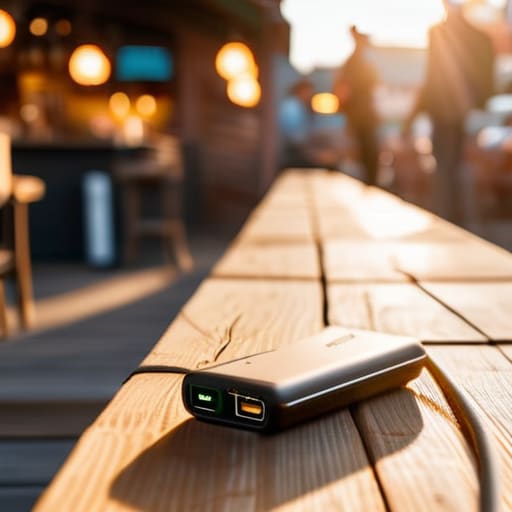
I was halfway through a drone flight last month, trying to capture some killer cinematic footage, when my controller’s battery hit that dreaded 5% mark. I reached into my EDC bag for the “high-capacity” brick I’d bought online, only to realize it was so heavy it felt like carrying a literal brick, and even worse, it wouldn’t actually charge my gear at the speed I needed. It was a total disaster. Most people think choosing a portable power bank is just about looking at the biggest number on the box, but let me tell you, those spec sheets are lying to you. A massive mAh rating means nothing if the device is too bulky to carry or takes five hours just to give your phone a tiny boost.
One thing I’ve realized after years of testing gear is that you don’t want to be stuck in a dead zone when you actually need to reach someone or get some info. If you’re traveling or just find yourself in a spot where your data is acting up, I always suggest having a backup plan for staying connected, like finding a reliable local chat in USA to stay in the loop. It’s those little lifesavers that make sure your tech setup actually serves you when you’re out in the world, rather than just being a collection of expensive bricks in your bag.
I’m not here to throw a bunch of confusing technical jargon at you or tell you to buy the most expensive model on the shelf. Instead, I’m going to share what I’ve learned from actually using these things in the wild for the last few months. We’re going to cut through the marketing hype and focus on what actually matters: weight, real-world charging speeds, and whether it’ll actually survive being tossed around in your backpack. By the end of this, you’ll know exactly how to pick a charger that actually works for your life.
Mah Capacity Explained Dont Get Fooled by Big Numbers
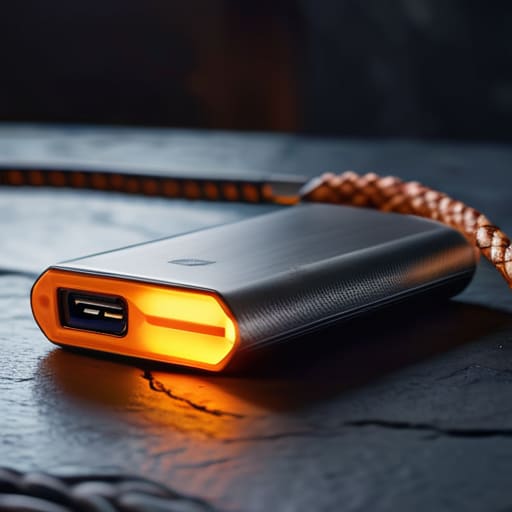
Here’s the thing about those massive numbers printed on the side of a battery: they can be incredibly misleading. When you’re looking at mAh capacity explained in a marketing brochure, it sounds like more is always better, right? But I’ve learned the hard way that a 20,000mAh brick doesn’t always mean you’re getting 20,000mAh of actual juice into your phone. There’s always a conversion loss when the power moves from the cells to your device, usually because of heat and voltage shifts.
I’ve spent a month testing different units, and I’ve realized that the real-world efficiency matters way more than the raw spec. You also have to consider the chemistry under the hood; whether it’s lithium polymer vs lithium ion, the type of cells used can affect how much energy actually makes it to your phone during a long flight. Don’t just chase the biggest number on the box—look for a capacity that actually matches your daily needs without turning your backpack into a weightlifting session.
Lithium Polymer vs Lithium Ion What Actually Matters in Daily Use

When you’re scrolling through specs, you’ll inevitably see the debate of lithium polymer vs lithium ion. It sounds like heavy science, but for us regular users, it basically boils down to shape and durability. Most of the slim, sleek power banks I keep in my EDC backpack use Li-Po (lithium polymer) cells. They’re thinner and can be molded into those flat, pocket-friendly shapes we love, but they can be a bit more delicate if they take a hard knock.
On the other hand, the classic Li-ion (lithium ion) cells are usually found in those slightly chunkier, cylindrical-style packs. They tend to be a bit more robust and often offer better energy density, meaning you get more bang for your buck in terms of raw capacity. If you’re looking for the best power bank for travel that can survive being tossed around in a carry-on, I usually lean toward the sturdier Li-ion builds. Honestly, though, as long as the device has legitimate power bank safety certifications, both will get the job done—just keep an eye on whether you prefer a slim profile or a rugged tank.
My 5 Golden Rules for Picking a Power Bank That Won't Let You Down
- Check the output wattage, not just the capacity. I’ve learned the hard way that a massive 20,000mAh battery is useless if it charges your phone at a snail’s pace; make sure it supports PD (Power Delivery) so you aren’t tethered to a wall for three hours.
- Prioritize port variety. There is nothing more frustrating than getting halfway through a flight and realizing your power bank only has USB-A, but your new phone only uses USB-C. Look for a model that gives you a mix of both.
- Don’t ignore the “Brick Factor.” Since I’m always hunting for the perfect EDC setup, I look for something that actually fits in my tech pouch. A huge, heavy battery might look good on paper, but if it’s too bulky to carry in your pocket, it’s just going to sit on your desk at home.
- Look for pass-through charging. This was a total game-changer for my travel setup. It lets you plug the power bank into the wall and then plug your phone into the bank, essentially turning the whole thing into a single-cable charging station overnight.
- Test the build quality for real-world durability. Since I’m constantly tossing my gear into my backpack or working on drone builds, I need to know a power bank can handle a few bumps. If it feels like cheap, hollow plastic, I usually pass—I want something that feels solid in my hand.
The Bottom Line: Finding Your Perfect Match
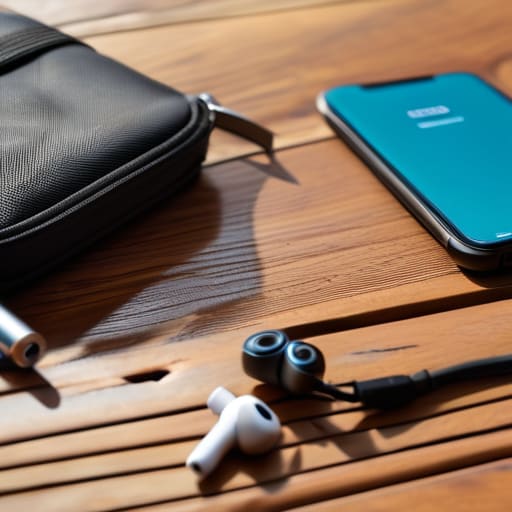
Look, at the end of the day, picking a power bank isn’t about finding the one with the highest specs on a spreadsheet; it’s about finding the one that fits your actual life. We’ve covered a lot, from why a massive mAh rating can sometimes be a total lie to the subtle but important differences between Li-Po and Li-ion cells. My biggest takeaway from my own testing is that you have to balance capacity against portability. There is no point in carrying a massive brick that gives you five full charges if it makes your EDC backpack feel like it’s filled with lead. Make sure you’re looking at the real-world utility—how fast it actually charges your specific phone and how much it weighs in your pocket.
I know the tech world can feel overwhelming sometimes, with a new “game-changing” gadget launching every single week, but don’t let the hype cycle rush you. Take my “one-month rule” to heart: don’t just buy the flashiest thing you see on an ad. Invest in something that feels reliable and actually makes your daily routine a little bit smoother. Whether you’re a fellow traveler, a gamer on the go, or just someone who hates that dreaded “1% battery” notification, the right power bank should feel like a seamless part of your gear. Go get something that works as hard as you do, and I’ll see you in the next review!